IrishAmericansSupportIreland.com
Mass Immigration - Destroying Irish Culture
Mass Immigration - Creating a Housing Crisis
Globalist Politician - Ignoring Irish Voices, Kneeling to the EU
Crime - Increasing for all cities and towns
NEW THREAT - Censorship from the EU
GARDA AND GOVT OFFICIALS - TAKE ACTION
Have information on the anti-Irish work of Harris, Simon, McEntee, Richmond and other Gombeen EU Overlords from working in the Garda, the Irish Govt or elsewhere.
Send a CONFIDENTIAL EMAIL TO [email protected]
ALL INFORMATION IS CONFIDENTIAL.
CREATE AND SEND YOUR EMAIL FROM A NEW EMAIL ACCOUNT (like Gmail)
KEEP THIS ACCOUNT TO YOURSELF AND READY TO DELETE IT.
THE EU HATE SPEECH LAW MEANS LESS FREEDOM FOR IRISH CITIZENS.
BLOW THE WHISTLE ON GLOBALIST GOMBEENS!
How One Writers Book Stopped Tyranny: Solzhenitsyn
In many times, a writer can have a tremendous affect on a community, a country and the world. In my personal case, one such book was by Aleksandr Solzehnitsyn, "One Day In the Life of Ivan Denisovich".
In case, you say...who?
Aleksandr Isayevich Solzhenitsyn(11 December 1918 – 3 August 2008) was a Soviet and Russian author anddissidentwho helped to raise global awareness ofpolitical repression in the Soviet Union, especially theGulagprison system. He was awarded the1970 Nobel Prize in Literature His nonfiction workThe Gulag Archipelago"amounted to a head-on challenge to the Soviet state" and sold tens of millions of copies.
"One Day In the Life of Ivan Denisovich" was about Soviet labor camps in the 1950's. Such labor camps existed in National Socialist Germany, Communist China, Cambodia's brutal Pol Pot communist regime and more. Extremely violent and repressive warm collectivism of State measures against the rugged individual.

Influential Books That Exposed Injustices and Sparked ChangeBooks have long served as catalysts for social, political, and cultural shifts by shining a light on systemic injustices, corruption, exploitation, and human rights abuses.
Drawing from historical examples like Aleksandr Solzhenitsyn's The Gulag Archipelago (which exposed Soviet labor camps and eroded support for communism globally), Émile Zola's Germinal (which dramatized the exploitation of French miners and fueled labor reforms in Europe), and Peter Schweizer's Clinton Cash (which alleged foreign influence and corruption tied to the Clinton Foundation, influencing U.S. political investigations and discourse), here are other notable works that have had measurable impacts on countries or the world. I've focused on books with documented roles in policy changes, movements, or public awareness shifts, spanning fiction and non-fiction.These selections are based on their historical influence, as noted in various analyses of literature's role in social justice.
Uncle Tom's Cabin by Harriet Beecher Stowe (1852): This novel vividly depicted the horrors of slavery in the American South, humanizing enslaved people and galvanizing abolitionist sentiment in the North. It's credited with intensifying anti-slavery fervor, contributing to the U.S. Civil War and the eventual emancipation of slaves.
Bury My Heart at Wounded Knee: An Indian History of the American West by Dee Brown (1970): Chronicled the systematic dispossession and massacres of Native American tribes by the U.S. government. It reshaped public understanding of American history, boosting indigenous rights movements and contributing to laws like the Indian Self-Determination Act.
Cry, the Beloved Country by Alan Paton (1948): Highlighted racial segregation and poverty under apartheid in South Africa. It raised international awareness, influencing global anti-apartheid campaigns and sanctions that pressured the regime toward reform.
The Jungle by Upton Sinclair (1906): Revealed appalling working conditions and unsanitary practices in Chicago's meatpacking industry. It directly led to U.S. federal regulations, including the Pure Food and Drug Act and the Meat Inspection Act, transforming food safety standards.
All Quiet on the Western Front by Erich Maria Remarque (1929): Depicted the brutal realities of World War I trench warfare from a German soldier's perspective, exposing the futility and horror of war. Banned by Nazis, it fostered anti-war sentiment globally and influenced pacifist movements between the world wars.
The Diary of a Young Girl by Anne Frank (1947): A firsthand account of hiding from Nazi persecution during the Holocaust. It humanized victims of genocide, educating millions about antisemitism and contributing to Holocaust remembrance efforts, including museums and international human rights conventions
These books often faced bans, backlash, or censorship upon release, underscoring their disruptive power. While not exhaustive, this list highlights works with tangible legacies in laws, movements, or cultural attitudes. If you'd like more details on any, recommendations from a specific era or region, or similar books in fiction vs. non-fiction, let me know!

Immigration Video-Ireland
Understand What is Killing Ireland
Nick Delehanty
Eddie Hobbs

Go to "X" and join our community
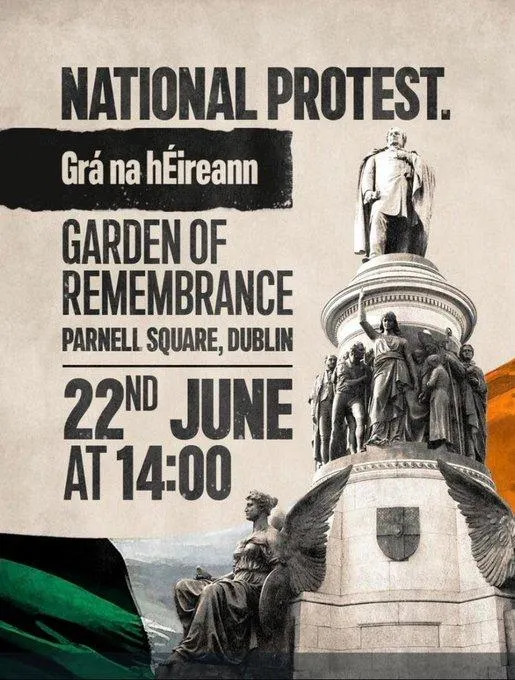
JUNE 22ND 2pm
Irish Demonstration - Dublin
Garden of Remembrance
Demonstrations are organizing.
Go to "X" and join our community
NO IRISH PRESS FREEDOM
Ben Scallan Reports
https://www.youtube.com/watch?v=eZFH_zFy2kgIndependent media is an essential part of any free society, and is vital for keeping the political establishment in check. But how can journalists hold government politicians to account, when they’re all in bed together - sometimes literally? Ben Scallan investigates.
Go to "X" and join our community
IMMIGRATION
Senator Sharon Keogan Speaks
Senator Keogan speaks on the massive 110,000 person rally held in Dublin on April 26th to keep Irelad for the Irish. The Dail (Parliament) has completely ignored the issue of immigrationn and the voices of the Irish people.
Senator Keogan takes them to task!
Go to "X" and join our community
INVESTIGATE
Young Irish Man Takes Beating
Watch this video. A young Irish man, maybe in County Tipperary, is pushed around and beaten by aother man. Who is he? Did the police (Garda) investigae or ignore it? What about the media?
We believe that both might do NOTHING.
Contribute clues and notes on X now and help.
Go to "X" and contribute clues on this Pinned Post.
get informed. fight for irish sovereignty
Frequently Asked Questions
Learn about the problem to help fight for the Solution.
Question 1: What do you mean "Join the Fight" in Ireland?
Globalists like Micheal Martin and others are kowtowing to the EU and allowing massive immigration - illegal and legal - into Ireland. With no vetting of the immigration. Crime rates have gone way up. The charming streets of Dublin are no more. The Irish government ignores the Irish people's concerns and voices - imposing IPAS immigration centers of hundreds into small towns in Ireland. The result: Devastation of the Irish people and its culture.
Question 2: What can I do as an Irish-American in America?
Take Action! Public pressure to Irish American politicians who recognize the Globalist threat to the Irish culture and Irish people can help. Support Irish politicians in Ireland. Support Irish media (not RTE!) and fight for the Irish people. We have a list! We are working on action points too that you could undertake to help the good For the Irish politicians and other activists.
Question 3: Who are these Globalists and what is their agenda?
Globalists in Irish government include many officials who disdain or outright hate the concept of Irish sovereignty and nationhood. Ireland fought repression and genocide for 800 years and its people are not going to surrender to the EU crowd. Prominent globalists Irish politicians (we have a list!) are Micheal Martin, Simon Harris, Helen McEntee, Neale Richmond and more. They are gombeens, an Irish word for a greedy person who looks out for themselves to make money. And the Irish illegal and legal immigration industry is full of these gombeens.
Question 4: What if I do nothing?
Ireland and the Irish culture will be gone. Some projections indicate, with unchecked immigration, that the native Irish people will be a minority in their own country in 10 years. When your grandchildren want to hear the story of how you helped save Ireland, have something to tell them!
X